Showing posts with label Juliana Redding. Show all posts

Tuesday, September 15, 2015

Kelly Soo Park - Arrested by LA County DA's Office

T&T's Exclusive Coverage of Kelly Soo Park Murder Trial
 
Kelly Soo Park, during opening statements of her murder trial.
Park was acquitted of murdering Juliana Redding on 6/4/13.

UPDATE 9/16: MyNewsLA.com has a report from City News Service that has a bit more information. Park's next court appearance will be September 25 in Dept. 109, the same judge for Park's murder trial. Park is again represented by George Buehler. There was also this interesting bit of news in the article:
Los Angeles Superior Court Judge James R. Brandlin ordered Kelly Park, 49, to remain jailed in lieu of $18.5 million bail while awaiting a hearing Sept. 25.
(snip)
Deputy District Attorney Dayan Mathai told Brandlin that the District Attorney’s Office objected to attorney and former prosecutor Alan Jackson — who had handled the District Attorney’s murder case against Park for a time — representing one of the defendants. The judge said that matter can be dealt with by Kennedy at the hearing next week.
Tuesday, September 15, 2015.
The LA County District Attorney announced 15 individuals were indicted on a 150 million insurance fraud and patient scam conspiracy.

Kelly Soo Park, who was acquitted in a 2013 trial of murdering aspiring actress Juliana Redding is one of the fifteen individuals arrested along with Dr. Munir Uwaydah, Park's former employer. The DA's Office press release indicated Uwaydah was arrested in Germany.

The LA County Sheriff's Inmate Locator website indicates Park was arrested yesterday around 10:40am and is currently at the Central Regional Detention Facility in Lynwood, California. Her bail amount is 18.5 million. 
Screenshot of LA County Sheriff's Inmate Locator Page on Park.

There are two indictments filed by the LA County DA.

BA425397 - Against Park, Uwaydah and nine other defendants.
BA435339 - Against four other individuals.

The Los Angeles Times as well as CBS 48 Hours Crimsider were the first to break stories on Park's arrest.

Special thanks to T&T reader Mason for alerting me to Park's arrest on fraud charges.

AP Article in NY Daily News

The next hearing on this case can be found HERE.

Monday, March 16, 2015

Julianna Maureen Redding - 10/25/86 - 3/16/08

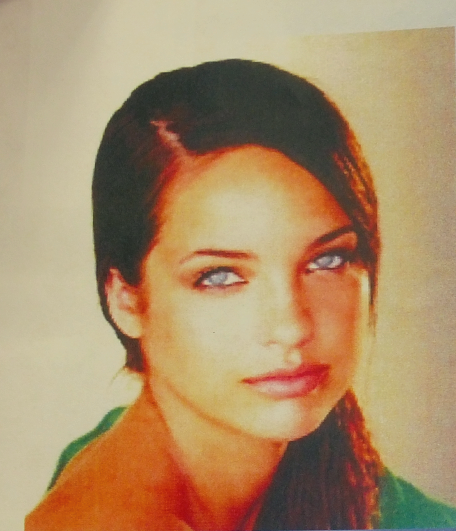
Juliana Redding

Juliana Redding, a young model and aspiring actress grew up in Tucson, Arizona, where she attended Catholic school, participated in the drama club and played varsity golf. In 2005, Juliana moved to the Los Angeles area to pursue a modeling and acting career.

At 18, Juliana landed a small part in the comedy Kathy T.  In 2007 she received a lot of attention when she appeared in the men's magazine, Maxim.

 Juliana Redding

She lived in a small apartment in Santa Monica, loved her little dog, worked part time at a local bistro and was taking classes at Santa Monica College. She was close to her family and spoke to them on a daily basis. Juliana was good friends with many of her coworkers at the restaurant. The restaurant was a place where many of her friends came to meet, have a meal and hang out.

She was stunningly beautiful; talented. She had opportunities and a full life ahead of her. Tragically, Juliana was found beaten and strangled to death in her apartment on March 16, 2008.

Juliana Redding, taken hours before her death.
Photo credit: Friend Kelly Duncan

Juliana's murder went unsolved for over two years until Kelly Soo Park (an associate of Juliana's former boyfriend, Munir Uwaydah), was arrested for her murder. Uwaydah had bragged to Juliana's father, Greg Redding that he had a "female James Bond" in his employ. Kelly Soo Park's fingerprint and a drop of her blood was found on a dinner plate in Redding's kitchen sink. Park's DNA was found around Juliana's neck, on the t-shirt she was wearing, her cell phone and on the kitchen stove.

Park went on trial in May 2013 and was found not guilty of Redding's murder on June 4, 2013.

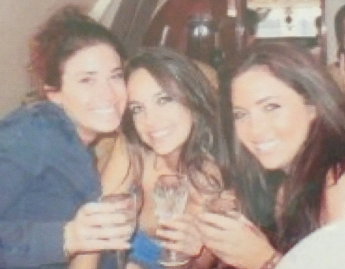
A happy moment at Juliana's 21'st birthday party.
L-R: Ashley, Juliana, Jessica

T&T full case coverage
Julianna Redding Bio at In.com
Photos of Juliana & her mother, Patricia Redding
Former DDA Alan Jackson comments on the case

Monday, January 20, 2014

Kelly Soo Park sues Detective Karen Thompson, Santa Monica PD - The Complaint

I obtained a copy of the lawsuit that Kelly Soo Park filed against Detective Karen Thompson of the Santa Monica Police Department.


You can also read the document on T&T's SCRIBD account HERE.

Wednesday, January 15, 2014

Kelly Soo Park Sues Santa Monica Police Department

6/4/13: Kelly Soo Park reacts after being acquitted on murder 
charges in a downtown Los Angeles courtroom.

Los Angeles Times Now is reporting that Kelly Soo Park is suing the Santa Monica Police Department:
A woman acquitted of murder last year in connection to the high-profile slaying of an aspiring model filed a lawsuit Wednesday accusing Santa Monica police of intimidating witnesses and damaging her reputation.

Kelly Soo Park, 48, alleges three witnesses who planned to testify on her behalf were scared off or tainted by Santa Monica Police Det. Karen Thompson.
T&T covered the Kelly Soo Park trial.

In 2010, Kelly Soo Park was arrested for the March 2008 murder of 21 year old Juliana Redding.  Redding was found beaten and strangled to death in her apartment. Park's fingerprint and a drop of her blood were found on a ceramic dinner plate in Redding's kitchen sink. Park's DNA was found around Redding's neck, on the front and back of the t-shirt Redding was wearing, on Redding's, blackberry cell phone as well as on a stove knob.

Deputy District Attorney Stacy Okun-Wiese prosecuted the case.  The prosecution alleged that Redding was killed after her father, Arizona pharmacist Greg Redding, backed out of a business deal with Dr. Munir Uwaydah, who dated Juliana for a short time.

Park was acquitted of all charges on June 4, 2013.

I clearly remember when the defense argued these motions to present this evidence just days before the trial was about to start.  Judge Kennedy ruled over and over again that this evidence did not meet the standard. That there was no "nexus" between John Gilmore and Juliana Redding's murder.

Regarding Melissa Ayala, Judge Kennedy said something to the effect that if you asked Ms. Ayala on Wednesday how she felt about John Gilmore, she would say she loved him but if you asked her on Thursday, she would say she was afraid of him.

Saturday, November 23, 2013

Kelly Soo Park Trial: Synopsis Part IV -- Non-Admitted Evidence via Pretrial Motions

 Juliana Redding, undated photo

COMPLETE KELLY SOO PARK TRIAL COVERAGE LINK

UPDATE: spelling, clarity
On June 4th, 2013, a jury found Kelly Soo Park not guilty of the murder of Juliana Redding.  Redding was found strangled to death in her Santa Monica apartment on March 16, 2008. Park was arrested for Redding's murder over two years later.

Juliana Redding's living room where prosecutor's believe 
Juliana fought for her life.

After the trial was over, I promised T&T readers that I would present a synopsis of the trial to help them understand the jury's verdict. Many readers did not understand the verdict when the state presented evidence that Park's DNA was found on several items, including the victim. Criminalists testified at trial that Park's DNA was found around Juliana's neck, on the T-shirt Juliana was wearing at the time of her death, on her cell phone left on a bedside table, as well as on a stove knob in the kitchen.

This is my last post in a four part series, that gave a detailed, post-trial analysis of the case. Part IV covers pre trial motions argued before trial, as to the admissibility of evidence one side or the other, wanted to introduce.

Special thanks and shout-out to my fellow journalist Lonce LaMon of Adjuster.com for her assistance in purchasing motions as well as photographing the evidence once the trial was over. You can see more of the exhibits in the Part III posts. I have purposefully not published a photo of Juliana as she was found out of respect for her family and friends.

CBS 48 HOURS
Tonight, CBS 48 Hours will profile the murder of Juliana Redding and the trial of Kelly Soo Park  who was charged with her murder. All three major networks had producers who attended pretrial hearings and attended most or some of the trial. (T&T was the only source for daily updates on the trial. T&T also reported the verdicts before any other news source. Sprocket) Journalists for NBC and CBS worked together to try to get Judge Kennedy to approve video taping of witness testimony. For the court to agree to that request, Judge Kennedy wanted the network to mount cameras on the wall.  The problem is, those cameras are not something the networks readily have at their disposal, and the daily cost of one camera is several thousand a day. Consequently, only opening statements and closing arguments were video taped.

I knew something was in the works when respected LA Times reporter Jack Leonard sent out this tweet:


Leonard is an excellent journalist and that was most kind of him. (It's a good bet that CBS has an arrangement with the LA Times to feature their journalists on cases they profile.) Not long after, former prosecutor Alan Jackson made a post about the upcoming episode on his Facebook Page.  The initial prosecutors, Jackson and his co-counsel at the time, Eric Harmon (now Judge Harmon),  probably know the case facts as well as DDA Stacy Okun-Wiese, who prosecuted Park.

I will be most interested to see if CBS producers were able to track down any of the jurors and get them to appear on camera. After the verdicts were read in court, the jury asked to be escorted out of the courthouse via a private elevator.  Back on June 13th, a T&T reader left a comment with information about the jury's verdict. Since the commenter asked that I not publish the comment, I have honored that request.

Throughout my coverage of the trial, several people who knew Kelly Soo Park over a significant portion of her life, contacted me and shared what they knew about her. Unfortunately, every single person spoke off the record and were not willing to share this information publicly.

Kelly Soo Park Trial Synopsis
Part I Opening Statements
Part II Prosecution Witnesses 1-10
Part II Prosecution Witnesses 11-18
Part II Prosecution Witnesses 19-21
Part II Final Prosecution & Defense Witnesses
Part III Prosecution Opening Argument
Part III Defense & Prosecution Closing Argument
Part III Additional Arguments to Jury

PART IV - NON-ADMITTED EVIDENCE via PRETRIAL MOTIONS
Before the trial even started, both sides presented motions to admit or exclude evidence at trial. Here's brief review of some of the more significant motions. 

James Bond Girl - Defense Motion to Exclude
From the moment Park was arrested, news agencies were reporting that Dr. Munir Uwaydah --the only connection between Park and Juliana-- had bragged to Juliana's father, Greg Redding that he had an enforcer, a female "James Bond" who would do his bidding. The public heard about this alleged statement but the jury didn't.

Dr. Uwaydah was not on trial; Kelly Soo Park was. Judge Kennedy ruled that Dr. Uwaydah's statement to Greg Redding could not be admitted because it was hearsay.

1101b Evidence People's Motion to Admit Other Conduct -- Defense Opposition Motion
The people alleged "The defendant has a history of threatening and intimidating individuals who have an ongoing dispute with her employer, Dr. Uwaydah." The people had two instances of this type of conduct they wanted to introduce at trial.  This evidence would have supported their theory of the case that Park was acting on the orders of Dr. Uwaydah because of the failed business venture with Juliana's father, Greg Redding.

Judge Kennedy ruled that this evidence was inadmissible. With this ruling, the people lost their ability to present to the jury their theory of Park's true relationship with Dr. Uwaydah. In closing arguments, the defense told the jury that there was no evidence presented that Park had any personal desire to harm Juliana, or that she had the murderous heart, capable to carry out such a violent act.

Dr. Uwaydah's Alleged Criminal Conduct -- Defense Motion to Exclude evidence of Uwaydah's Departure -- Defense Motion to Exclude Evidence of Fraud
The defense filed a motion to excluded references to alleged criminal conduct by Dr. Uwaydah. Dr. Uwaydah was not on trial, so it was not surprising to me that Judge Kennedy ruled this evidence was inadmissible.  The defense also argued to exclude references to when Dr. Uwaydah fled the country. Judge Kennedy ruled that there could be more than one reason for why Dr. Uwaydah fled, so that evidence was also excluded.

Drugs Found in Park's Possession During Arrest -- Defense Motion to Exclude
When Park was arrested with Ronnie Case, police "...found several bottles of prescription drugs in the bed of the truck [they were in when arrested], carrying the names of various doctors and various patients." Judge Kennedy ruled for the defense and this evidence was not admitted at trial.

John Glimore's Alleged Conduct & Statements --
Defense Motion to Admit Evidence of Third Party Culpability
The defense tried to present evidence to the jury that John Gilmore could have been the individual who killed Juliana Redding.  Gilmore was an on again, off again boyfriend of Juliana. Witnesses allegedly had seen him become violent against objects (furniture, etc.) when he argued with the victim.  The defense argued to have another girlfirend of Gilmore's, "M.A." testify about alleged violent conduct against her (choking) and statements he made to her about Juliana.  The defense also argued to present evidence of other acts by John Gilmore to show his violent nature.  The defense also filed a supplemental statement by defense counsel Mark Kassabian to support the 3rd Party Culpability evidence.

Judge Kennedy ruled that this evidence did not meet the standard of 3rd Party Culpability, and was excluded at trial.

Thursday, August 8, 2013

Kelly Soo Park Trial Synopsis: Part III, Additional Arguments to Jury

Prosecution exhibit of Juliana's bedroom floor. 
Circle outlines blood underneath Juliana's right foot.

This is T&T's continuing synopsis of the Kelly Soo Park trial, Part III, closing arguments. Sprocket.

Continued from Defense & Prosecution Closing Argument....

June 4th, 2013
The jury's verdict on the lesser count, first degree murder is read in open court: Not Guilty. The jury had not reached a verdict on second degree murder.

Immediately after, the jury returned to the jury room and Judge Kennedy reviewed with counsel the jury's questions regarding further instruction on second degree and first degree.

Judge Kennedy ruled that each side would get an additional 10 minutes of argument to address the jury. The defense objected.  Defense counsel George Buehler objected to that procedure, arguing that the jury did not ask for "more discussion of the evidence." Buehler expanded on why he thought this was an error the court was making. "... and I fear that again, the message that will go to the jury is the court is not happy with the way they have done things so far; they need more help. And I don't think that's appropriate. I think it becomes coercive for whatever minority of jurors have a different opinion from the majority. And particularly when they haven't asked for it."

The court explains that what counsel will be allowed to argue is the differences between first and second degree murder.  Buehler objects. He's not sure that's what the issue is with the jurors. Buehler argues to the court, "So I don't see how the court can impose any real structure on what counsel and I can argue. So I do object, your honor."  Judge Kennedy responds, "Okay." It's not clear if she ruled she agreed with Buehler or if she just acknowledged his objection. The state had the option to split up their time into five minutes before the defense and their remaining five minutes after.

When the jurors are brought out, Judge Kennedy tells the jurors they will hear an additional 10 minutes each of argument on the issues the jury raised regarding the difference between first and second degree murder. Judge Kennedy also references page 10 of jury instructions, instruction 520, which also related to those same issues. When the additional arguments are over, she asked them to return to the jury room to continue their deliberations to try to reach a verdict.

Prosecution
DDA Stacey Okun-Wiese speaks to the jurors extemporaneously. She doesn't use any notes at all. She starts off by explaining to the jurors that all murder in California starts at second degree. There are two ways to get there: expressed or implied malice.  First degree murder requires expressed malice and premeditation and deliberation.

Okun-Wiese then moves back to explaining second degree murder and the elements that need to be proven to convict.  "There are two separate ways that the law recognizes that a jury can find the defendant guilty of second degree murder. The first way that a jury can reach a finding of second degree murder is when there is an act that causes the death of another individual. In this case it is the act of strangulation. In addition to that act there has to be what is called malice aforethought."

Okun-Wiese then talks about jury instruction 520. "This instruction tells you that element one, the defendant committed an act that caused the death of another person; and two, when the defendant acted, she had a state of mind called malice aforethought."  She then gives detailed examples of expressed malice and implied malice to the jury.  Okun-Wiese explains expressed malice as going up to someone and saying, "I'm going to shoot you," and then proceeding to shoot them.  Implied malice may not be that clear from the evidence.  "..sometimes the circumstances are such that it is not that clear by the actual evidence that the person had the intent to kill, but the person's action suggest that they shouldn't be getting away with this act that they committed just because they come in and they say, 'I didn't mean to kill her.'  So what the Law does is, it lays out four elements for you which are listed in jury instruction 520."

Okun-Wiese then details those four elements for the jurors.  The defendant's strangulation of Juliana, placing her hands around her neck, cutting off her blood and air flow that caused her to die, that meets the first element.  "Stopping the flow of blood and oxygen to the brain causes loss of consciousness, brain damage and/or death," Okun-Wiese states meets element number two, which state the consequences of the act were dangerous to human life.  "Again, you look at the facts in this case. The defendant placed her hands around Juliana's neck. That was an act that the probable consequences would either be serious harm to the body and/or death."

Element three requires that at the time the defendant acted, she knew the act was dangerous to human life. Element four, the defendant acted deliberately with conscious disregard for human life.

"Now you have sent a question asking what conscious disregard for human life means. And here is what it means. You know what you are doing could cause serious injury to another person and/or death, and you do it anyway. You do it because you don't care. You understand that there is a risk you could harm somebody, and you simply say, "I do not care" and you do it anyway," Okun-Wiese tells the jury.


Okun-Wiese then brings up further evidence of Park's disregard for human life "...when she turned the stove on and left the gas emanating through the apartment building. It could not have only caused an explosion in Juliana's apartment; but it could have caused an explosion throughout the whole apartment complex."

Okun-Wiese argues to the jurors, "If you are going to turn on the gas, there is a reason why you are doing it. It is to cover up your crime and to create  it so there is no evidence left at the scene."

Okun-Wiese tells the jurors, "It' is the people's position that when the defendant placed her hands around Juliana's neck, the defendant intended to kill her. She beat Juliana up prior to putting her hands around her neck. We know that from the testimony of Dr. Louis Pena. She had numerous hemorrhages in her head from being hit or banged against the wall. This strangulation occurred after that beating. When she placed her hands around Juliana's neck, it is clear that she wanted Juliana to die."

Okun-Wiese continues, "And if you are not satisfied that there is an expressed intent, an express malice, then look to implied malice. The defendant knew he act of placing her hands around Juliana's neck could cause death or serious bodily injury, and she did it anyway because she just didn't care. Thank you."

The court informs the prosecution that the used their entire ten minutes.  Then George Buehler gets up to present his additional ten minutes.

Defense
Buehler first thanks them for their hard work in the case. He then makes the point that what they just heard is argument. "The district attorney has no authoritative word on what the instruction about malice means. Ultimately each one of you is to make your own judgement by reading the instructions, and make your own judgement about what that instruction means as applied to the facts as you find them.  The prosecutor has given you her version of the facts and her version of what that should mean under the instruction."

Buehler then explains there is a difference between first degree and second degree murder.

"But second degree murder still requires a very high state of intent, of criminal intent. It does require malice. And the fact about this case, I submit to you ladies and gentlemen, is that there is a whole lot of uncertainty, a lot of unanswered questions s to what happened in the apartment the night that Juliana Redding was killed."

"Even if the prosecution has proven beyond a reasonable doubt that Kelly Park was there, there are a whole lot of questions as to what actually happened there, who else might have been there, what other people might have done. You have very little evidence about what actually happened."

Buehler goes onto explain that the prosecution relied heavily on the DNA to place his client in the apartment and to place Park's hands around Juliana's neck.  "But you know, because you heard the evidence, that that DNA evidence leaves a lot of questions unanswered."  Buehler reminds the jury that it wasn't an expensive expert that talked about transferred DNA, "...it was the prosecution's expert. It was the prosecution's expert who said that there are -- there is a lot of uncertainty in the science of how DNA gets places and how it can be transferred, and that she could not give an opinion, as an expert, on whether or not that DNA got transferred to somebody else rather than coming from Kelly Park."

Buehler states that it is a question why Park's fingerprints were not found all over the apartment if she were handling things.  He states there was no investigation of the alibi of Brian Van Holt.  Buehler tells there jury there are many unanswered questions in this case.

"And if there are questions that aren't answered, whether it is a question about the meaning of an instruction to where you collectively cannot come to an agreement on that; you have differing judgements, differing intuitions perhaps -- sometimes decisions we make are made on intuition, our gut.  If you have different views and you can't come to a clear answer that everybody can agree to on the meaning of an instruction or on the facts of what happened that night, then there is one instruction that controls: You go back to the early instruction 220, Page 2, that says, "A defendant in a criminal case is presumed to be innocent." And that presumption holds until such time as the prosecution has satisfied all of you, beyond a reasonable doubt, that under the instructions and under the evidence, beyond a reasonable doubt, the defendant is guilty."

"I submit to you that there is no such level of evidence in this case. Thank you, ladies and gentlemen."

The jury then went back to the jury room to deliberate again.

To be continued in Kelly Soo Park Trial Synopsis, Part IV....

Friday, July 12, 2013

Kelly Soo Park Trial Synopsis, Part III: Defense Argument; People's Closing Argument

Juliana and girlfriends with Uwaydah on his jet, 
Las Vegas birthday celebration trip, October 2007.

Continued from Trial Synopsis, Part III, Prosecution's Opening Argument...

Defense Argument, presented by George Buehler.
"I want to start just by reminding you that the things the lawyers say to you now are not evidence. And so you should check what I say to you against the evidence as you think back over the evidence. ... Now I want to start with that because I think there are a number of things that have been said by the prosecutor that were incorrect, okay?"

Buehler tells the jury that the prosecution spoke mostly about things that are not in dispute. The injuries are horrible. The question is, who inflicted them?  The severity of the injuries and the strength to overpower Miss Redding, it sounds like something happened very quickly. It took a lot of strength for somebody to overpower her.

"And even though Mrs. Park may have three inches and 40 pounds on Miss Redding , I submit to you that that's not enough to account for the brutality here, nor do you know anything about Kelly Park that would suggest that she has the level of really brutal evil intent that the murderer here had."

"Nor do you know anything about Mrs. Park, notwithstanding this lengthy investigation that would provide any reason why she would have done something so horrible. And the link to Dr. Uwaydah is just a neutral fact. ... There is nothing here to show that even Dr. Uwaydah had a motive to do this, let alone that Kelly Park would have done it for him.

Buehler agrees that when you see someone strangled right in front of you, you don't have to worry about why they did it. But when relying on circumstantial evidence, no one here was present when that happened.  You have to weigh this very carefully. "What do I know about this defendant where it would make sense that she would do something like this? And there is no evidence here to suggest that."

No matter how long the prosecution talked about the injuries or the huge numbers involved in the DNA -- we don't dispute that-- that that's Kelly Park's DNA. That's not what's in issue. "The question is what the significance of that is. What can we really conclude from that evidence?"

Buehler points out to the jury that the picture of Kelly Park that was presented by the prosecution during this trial was a booking photograph, and no one looks in those, even the innocent. They were put in front of you to give you a negative impression and that's not fair.

Buehler says the same thing about Detective Bambrick. The prosecutor said she refused to give fingerprints. "No she didn't. You can go back and read the transcript. She said, 'Take me to a police station.  She was willing to provide fingerprints; she wasn't wiling to provide it to those people."

Buehler tells the jury that Bambrick didn't show Park his badge, he only said, "Here's my card," because it isn't in the transcript and that Bambrick should have said from the beginning, "Here's my badge."

Buehler goes over the facts of the serving of the search warrant and that Mrs. Park kept asking to call her attorney and Mrs. Park had suspicion and frustration as to how she was being treated.  Buehler asks the jury, "They were all ready to arrest her. They did arrest her later that day. They already had a warrant based on their DNA evidence. Why did they have to go through that kind of trickery? If their evidence was really so strong?"

Buehler moves onto the DNA evidence. "The fact of the matter is, that in this case their case rests entirely on DNA evidence. They want to pretend it doesn't, but it rests entirely on DNA evidence. And you will have to ask yourselves, 'Is that enough for me to find, beyond a reasonable doubt, that Mrs. Park is guilty in this case?"

"Now when the prosecution brought out the NA evidence in the courtroom, there were two aspects to it that they didn't bring out to their witnesses. They asked a few questions about the transfer of DNA. Mr. Kassabian asked a lot more questions to bring out the phenomenon of transfer DNA. And that phenomenon simply is that DNA can be passed from person to person; that -- it way that aren't entirely clear to the scientists."

Some people when they touch something won't leave DNA and others seem to always leave a lot.  How much you leave may depend on when you last wash your hands.

"But when I touch an object, if I leave my DNA, then someone else can come along and touch that object and pick up my DNA. And they may go touch another object and leave my DNA, and I never touched that object. So we went through that with Annette McCall. And what could be particularly significant in this case is that if you pick up a rag or a towel and you wipe your face or you sneeze into it or you wipe your arm -- you are sweaty or something -- you can leave a lot of DNA fr someone to come along and touch that towel or use it for something and now be spreading your DNA around."

"The thing about DNA is, it tells you that somebody's cells are in a particular spot, but that's all it tells you. And Miss McCall said that. It doesn't tell you how that DNA got there; It doesn' tell you when that DNA got there. It doesn't tell you how long it has been there. And under the right conditions DNA can last a long time. Months. Years. ry, not hot. Not exposed to light. DNA endures; it lasts. So the transfer of DNA is an important issue to think about in this case."

The prosecution didn't want to think about it or discuss it but we did in cross examination of Miss McCall.

Buehler then talks about the 'possible' alleles, and the 'spikes' on the graphs, and the spikes that were below the threshold.  But Miss McCall acknowledged that you could be looking at actual alleles. There just isn't enough material to identify the marker correctly.

"So in almost every object here where Mrs. Park's DNA was found inside the apartment, there were those kinds of possible alleles, meaning that there were quite probably other people's DNA in the shpt; it is just not there in enough quantity that they are able to see who it is. And who knows how it might change your evaluation of the NA evidence if you knew who the people were who left those below threshold Alleles."

Buehler mentions that they know Brian Van Holt's DNA was found on Miss Redding's breasts. "What if his DNA had been found on the neck? That might change your view of the evidence."

"So all I'm suggesting to you is that that's a dimension of DNA that has to be looked at too and thought about as we think about what's the significance of it here and what inferences can we draw."

The extra single allele on Miss Redding's neck, an allele 17, could have been Cher Brooks; but it could have been somebody else's. That shows you, that there was at least two persons, that there was a mixture. In this instance we know there were at least three because you had that extra marker.  There was Juliana's DNA, Mrs. Parks DNA, and that extra 17 marker which didn't belong to either Juliana Redding or Mrs. Park.

"So there are pats of the science of DNA that the prosecution would just as soon forget about because they want that DNA to be perfect evidence. Now, because the DNA can be transferred and because the fact that Miss Park's DNA is in those spots, ti doesn't -- you don't know when it got there or how it got there -- you have to think about the possibility that Miss Park --- Mrs. Park's DAN got into Juliana Redding's apartment by some means other than Mrs. Park going in there and committing a murder. If Mrs. Park were in that apartment some time and left her DNA, then the murderer when he came in could have touched something that had her DNA on it and left it in these spots."

"If somebody had been some place else where they got Mrs. Park's DNA on them, or they had an object that had Mrs. Park's DNA, they could have brought it into that apartment and got it on their hand s in that way when they committed the murder."

"And you haven't been given any evidence by the prosecution that show you that Mrs. park was never in that apartment, nor do you know what possibilities there are as to how someone might have brought DNA into that apartment from Mrs. Park; maybe someone that knew Mrs. Park, had been with her recently."

The defense tells the jury that they probably wondered why they called Cher Brooks and Wendy Tavera, a neighbor and friend of Juliana's. It was to establish that Juliana had been rearranging furniture and she was going to give Tavera some plates.  This suggests spring cleaning, getting rid of things; the lamp she offered to Brooks.  And Mary O'Grady.  Five months prior, Juliana was living in the Beverly Hills home on Beverly Grove owned by Uwaydah, until her birthday weekend in Las Vegas and the blowup and the relationship with Uwaydah ended.  O'Grady remembers meeting Juliana at that home while remodeling it.  O'Grady remembers meeting and seeing Park there, in the kitchen of that home, on the same day.  "Here is one place where Juliana Redding and Kelly were in the same environment; maybe not at the same time, but were crossing paths."

A few months later, Juliana is doing some spring cleaning. "Now, could she have brought with her from the Beverly Grove apartment --to her apartment a towel? An orange plate that had been touched by Mrs. Park when she was in that house?  And that she brought it -- remember it sounds like she left Beverly Grove pretty abruptly. So maybe she just packed some things quickly and moved, and she actually brought with her to her apartment a plate that Mrs. Park had touched and left a fingerprint on and a drop of blood on, and maybe a towel, a napkin, something that Mrs. Park on a hot day in August might have wiped her face with, but-- like I say, sneezed into or whatever but left a lot of DNA there."

"And it just so happens that on that Saturday she is doing her spring cleaning and she pulls that stuff out, and that night when someone comes in and murders her, that person somehow touches those things. There is a very logical reason why a murderer might grab a towel or a napkin or something to clean up with."

Buehler tells the jury that they might think this idea is "far-fetched." Then Buehler tells the jury that it's more far-fetched that Park, a successful business woman, who has no relationship with Juliana Redding, would show up on a Saturday night and commit these heinous acts. "What do you have to show that that's a likely event? Is that anymore likely than the scenario I am suggesting to you that might have occurred?"

Buehler then talks about the blood in the fingerprint on the plate a bit more.  That Miss Funo, did not notice or recognize the blood and just put the fingerprint away. It was only months later that Zychowski looked at the fingerprint and saw that it was blood. Buehler asks the jury, "Was that blood fresh when it was lifted at the scene? Because that orange plate is in a sink sitting upright."  Buehler adds, "If that represents blood that Mrs. Park dripped onto that plate that night when she was allegedly committing this murder, why was it just a nice round drop as Miss Zychowski testified it was? Why didn't it run? Blood runs when it is fresh."  Buehler asks the jury that if it was fresh, or even 24 hours later, "Wouldn't it have been red? Wouldn't it have been the type of red that you recognize?"

Buehler explains, that since Funo didn't see the blood and recognize it as blood, "It got there some other way. And the way that could have happened is that that plate came from Beverly Grove. And then the question is, did it come with someone else that Had Mrs. Park's DNA on it, had her cells on it? Like a towel? A rag? Something that the murderer used and then took with him, probably because he used it to clean up?"

Buehler reminds the jury that the only other fingerprint besides Juliana's that was found was this single print of Park's.  Buehler then talks about the clean up, but that the clean up was incomplete. The broken necklace, the oil under the tray. "I mean, the reason you would clean up is, you would go around and you would want to wipe down all the places where you might have left your DNA and your fingerprints. And if that was done with a rag that had Mrs. Park's DNA on it, all those places would not have the killer's fingerprint or DNA, and would have Mr.s Park's DNA."

Buehler asks the jury that if Mrs. Park actually committed this murder, she didn't go around and clean up because her DNA is there. If her DNA is on the door knob, why isn't her fingerprint there?  Or the stove knob, why isn't her fingerprint there with her DNA?  Why aren't her fingerprints on the vase with the spilled oil that was cleaned up?  "One explanation would be, you have a killer who has got a rag; he is going around, he is wiping the places to get rid of his fingerprints, his DNA. And he has got Mrs. Park's DNA, unbeknownst to him but to his great benefit, on that rag."

"So think about those things as you listen to the prosecutor tell you how overwhelming their evidence is.  There are dangers in prosecutors want to jump to a conclusion and shut down their investigation as soon as they come up with something like DNA evidence."

Buehler tells the jury that they are not even arguing about whether or not the DNA is Parks. The defense agrees it's Park's DNA. Buehler tells the jury, "We are arguing about how it got there and what does it mean and how significant is it, and is it enough for you to find, beyond a reasonable doubt, that she is guilty of this terrible crime when they haven't given you anything to show why she would have been there doing this horrible thing, if she is even capable of it?"

"When I say 'capable' I mean physically capable of it, to go in there and inflict that kind of brutal force that quickly, and whether she is emotionally, psychologically, capable of it. What have they shown you about Kelly Park? She is a successful business woman. She is a mortgage broker. Ah, but a mortgage broker that has a connection to Mr. Uwaydah."

Buehler mentions the "bank capitol campaign" the Park was involved in along with Uwaydah. He asks the jury, does that connection mean she did this horrible crime?  He then asks the jurors what do they know about Uwaydah? "You don't know enough to conclude that he would even think of committing this crime."

Buehler reminds them about Uwaydah's business dealings with Greg Redding. That the negotiations broke down and then they started up again. That there was a period of time that they had nothing to do with each other. "And just note that no one got killed. Okay? I mean, if he is-- if Uwaydah is the guy that likes to kill people when they break off negotiations with him, no one got killed at that point."  Then Reddings fears were allayed and the relationship started up again.  Redding got his California pharmacy license and then, "they both walked away from the contract."

Buehler tells the jury the only details they have, is there wern't licensing agreements in place for the sale of the pain cream. The other thing was about the private plane that wasn't in the contract.  All we really know is that after they both went over everything, they decided not go to through with the contract. "There is no testimony about any rancor, any anger, any harsh words, any threats being exchanged.  When Mr. Redding's daughter was found dead, he didn't go tell people, "I think it is Dr. Uwaydah because he was threatening me" or "he was such a difficult guy or a bad guy. So how are you supposed to draw the conclusion that Dr. Uwaydah had a motive to kill Mr. Redding's daughter."

"So what's the significance of that link? So Kelly Park knows Dr. Uwaydah; does business with him; talks to him on the phone 16 times in the three days they had their wiretap up.  About what? Maybe they had a big business deal going on then. And you are supposed to conclude that because of that relationship, she had a motive to kill Juliana Redding? That is stretching it. I mean, that is really stretching it."

"And the fact that they would do that shows that they now that without a motive, even though they don't have to prove motive as an element of the crime, they know they need a motive to convince a rational jury to find Mrs. Park guilty, beyond a reasonable doubt, for this horrible crime. That's why that's all in here about this Dr. Uwaydah guy whom you really know very little about and put much evidence in."

Buehler tells the jury that the prosecution hasn't come up with any evidence to show them that Dr. Uwaydah had a motive to do this or that Mrs. Park would even think about doing something like this.

Buehler tells the jury the DNA isn't as clear as the prosecution submits it is. "There are ways that that DNA could have gotten there because the DNA does not tell a story; it just says, "This is whose DNA is here. It doesn't tell you how it got there, when it got there."

"There is absolutely no reason in the world anybody can show why she would have done this -- There aren't many people in the world period who would commit that kind of crime; you have no reason to believe that Kelly Park is that kind of person, and she gets the benefit of the doubt."

Buehler reminds the jury that Natasha Hovey helped Juliana move boxes out of the Beverly Grove house. Buehler puts up a photo Juliana Redding's hands, showing the jury again the broken fingernails. "Those fingernails are not chipped or damaged from the fight."  Buehler tells the jury about the testimony from the coroner's assistant, and that the coroner's assistant cut the fingernails at the scene.  "Rely on your memory of the evidence, not on what the lawyers tell you, including the prosecutor."

Buehler presents the jurors with the letters between Greg Reddings attorney and Uwaydah's attorney.  He explains Reddings letter as, "So what you have is a letter acknowledging that both side are withdrawing their offer. Now that's different because the prosecutor wants you to thing that Greg Redding has broken it off, and therefore you can think that Dr. Uwaydah gets angry about it and causes a murder to happen. That's not true."  Buehler tells the jury the evidence shows that both sides decided to call it quits.

Buehler moves onto the testimony about the luminol and that if it fluoresces, that can indicate the presence of blood bu there are other things as well that can cause that. "It is not clear that there was blood in those spots.

"I am using my memory, so if I am forgetting something, then forgive me. But I am pointing out to you places where I think the prosecutor has told you something that's incorrect.  So I am going to surprise the prosecutor by finishing quicker than I told her I would. In closing ladies and gentlemen, I want to remind you of the rules that govern here. It is the prosecution's burden of proof, okay? I mean, that's a rule that comes out of centuries of development of the legal system of England when they gradually developed the democracy and overthrew the tyranny of kings. It is an important rule. It was passed and enshrined in the 5th amendment of our constitution."

"When someone is charged with a crime, the state, the government, the prosecutor has the burden of proof. It is not just any burden of proof; it is proof beyond a reasonable doubt. And the defendant has no obligation to do anything but sit there and say you haven't proven it.  And they haven't proven it here. Mrs. Park did not commit that horrible murder.  Let the Santa Monica Police department go out and rethink their case and find the person that did it.  Thank you."

Prosecution Closing Argument
"The burden of proof is the burden of proof that the prosecution welcomes in this case.  The DNA in this case does tell a story. The DNA in this case does tell a story. This isn't a case where there is an abandoned car and one item of -- one item has DNA on it."  Okun-Wiese goes over all the items that have Park's DNA on them in Juliana's residence.

"There is no contention here, according to the defense, that the DNA we found at the scene on these six items belongs to the defendant. They want you to speculate about possibilities of how that evidence got there. You don't need to speculate because on each one of the items that the defendant's DNA was found on, there is an explanation of why that DNA is there; because this defendant is the killer."

Okun-Wiese tells the jury that the defense wants them to believe there was another person there and possibly another allele. "If there was another person there, that doesn't negate the defendant being there."

"The defense is asking you to speculate about information and evidence you didn't receive in this case.  You didn't receive evidence about Juliana taking a plate five months earlier from Uwaydah's house to her house. The evidence that you heard was, there was an orange plate in her sink. And according to Miss Funo, there was droppings of water on that plate in the sink. That plate, according to defense, has been sitting in that sink for five months undisturbed? And somehow the defendant touched that plate at the Beverly Hills home, and it made its way to Juliana Redding's home?  That's a ridiculous argument to make, quite frankly. The defendant's DNA and her fingerprint are on that plate because she moved that plate during the commission of the murder of Juliana Redding."

Okun-Wiese reminds the jury that motive is not an element of the crime. That she doesn't need to prove to the jury whether or not Park was capable of committing murder. The evidence in the case proves she did.

"The defense wants you to speculate that somewhere out in the world Juliana maybe picked up a towel that had the defendant's DNA on it and when she got to her home, she wiped that towel on her neck; she wiped that towel on the cell phone, she wiped that towel on the stove knob; she wiped that towel on her door, and she wiped tha towel on her tank top.  Then how do you explain the fingerprint? And how do you explain the blood?"

Miss Funo testified she used black powder to collect the latent prints. The jury has the fingerprint card. The blood wasn't that easily identifiable.  Miss Funo testified she lifted tons of prints. Of all those, only 16 were usable. Not everything you dust will reveal a latent print.

"The defense says, 'Yes, it is the defendant's DNA, but we want to -- we want you to speculate about how it got there. Maybe she was there at that apartment sometime before.' There was no evidence to that fact. The evidence was, she was there on the night of the murder , not any other time."

"And possibly, according to Miss O'Grady, they may have met one time five months before the murder, and somehow there was all of this DNA that was transferred from the defendant into Juliana's home and onto her person.  That's unbelievable."

Okun-Wiese reads to the jurors, jury instruction number 224, about circumstantial evidence.

"And that's what the defense is talking about here. He wants you to come to an unreasonable conclusion about how the defendant's DNA got to that location."

"The defense asked, 'What really does the prosecution have to prove that the defendant killed Juliana?'  We have provided you with all the evidence. The numbers are there. And there is not even a contention by the defense that it is the defendant's DNA on and around Juliana. That proves that the defendant killed Juliana. She is the one who placed her DNA around Juliana's neck when she was suffocating her and breaking her bone."

Okun-Wiese goes over all the other items that show Park put her DNA on those items herself.  Okun-Wiese tells the jury that the defense wants you to assume that Park is a successful business woman. "What we have heard is, between -- in the period of 18 months, the defendant received over $1 million from Dr. Uwaydah. And we have heard that she is, one, a medical consultant; two, she was a mortgage broker; three, she is overseeing something going on at Dr. Uwaydah's home; and four, she is in some type of bank venture."

Okun-Wiese reminds the jurors there was no testimony as to what that money was for. "It didn't go out to some real estate venture; it went into her personal account."

Okun-Wiese then touches on the relationship between Greg Redding and Uwaydah and the letters back and forth between counsel. "And nowhere in that letter does it talk about Mr. Uwaydah pulling out of the contract first."  Greg Redding ended negotiations because he didn't like what he was seeing from Uwaydah. He wasn't trusting him. He pulled out of the deal and five days later his daughter ends up dead.

Okun-Wiese tells the jury that they need to look at this case as a puzzle, and each piece presented by the prosecution completes the entire puzzle.  The defendant failing to provide her fingerprints when asked. The fingerprint on the plate at the location. The link between the defendant and Juliana and Uwaydah.

Okun-Wiese talks about the question the court asked them during voir dire, if they all had "common sense."

"How could that DNA have gotten there without the defendant putting it there?  Is it really likely that this DNA could have been transferred from five months prior? And the answer to that is no. And the defense wants to harp on the issue of motive. And I gave you examples. And yeah, if you saw me commit a crime against Detective Thompson, you are seeing it with your own eyes. But you still have no idea why I committed that crime. It doesn't change the facts of the case."

"And whether it is circumstantial evidence such as DNA evidence or a fingerprint, or it is eyewitness testimony, it is still evidence. And both types of evidence are acceptable in a criminal case such as this.  Having a motive or not having a motive doesn't negate the fact that the crime occurred. It doesn't take away from the people's burden to prove the elements of the crime, and it doesn't take away the fact that a crime was committed.  The people have proved their case beyond a reasonable doubt and are asking you to return a verdict of guilty as to first degree murder. Thank you very much."

To be continued.....

Saturday, July 6, 2013

Kelly Soo Park Trial Synopsis: Part III, Prosecution's Opening Argument

Juliana Redding, date unknown

Continued from Park Trial Synopsis Part II, Final Prosecution & Defense Witnesses....

Prosecution's Opening Argument
"Twenty-one year old Juliana Redding was brutally murdered on March 15th, 2008. Her young life was taken away by the defendant seated in this courtroom, Kelly Soo Park."

Malice Aforethought
Okun-Wiese describes the charge of murder.  Okun-Wiese uses the penal code 187 and jury instructions to tell the jury how murder is defined in California.  It's defined as someone was killed and that the killing was unlawful. It means it was not done in self-defense and that it was done with "malice aforethought."  Okun-Wiese describes implied and expressed malice. "When you put your hands around somebody's neck with enough force to break their hyoid bone, there can be no mistake that you intended to kill your victim.  Make no mistake about it ... we ahave express malice in this case."

Okun-Wiese gives an example for implied malice. The example is going to a convenience store that's closed then pulling a gun out and shooting through the glass. The act of shooting through the window is an intentional act. And if it's known that there are people in the store, and the decision is made to shoot anyway, that is implied malice.

Okun-Wiese explains that putting your hands around someones neck is an intentional act that is a conscious disregard for human life. It's safe to assume when you put your hands around someones neck, you cut off their airway. The person is going to go unconscious or die.

Okun-Wiese then goes onto explain first degree and second degree murder to the jury. First degree requires willful, deliberate, premeditation. She then describes what all three of these terms mean in the law.  These terms are described in the jury instructions.

In explaining premeditation she gives the example of driving in the city and faced with a yellow light at an intersection. "Should I go through that yellow light and get to my destination quicker and risk, one, getting a ticket; or two getting into an accident?  Or do I stay and not go through the yellow light and risk being late to my destination and just be a safe driver?"

"That act of considering what you are doing in that split second is premeditation and deliberation." Okun-Wiese describes how that applies in this case, using the testimony of Dr. Pena.  Dr. Pena could not give the jury how long it would take to be strangled. But he spoke about Juliana's hyoid bone and that it was completely fractured, and to do that would take both hands. "With every second that passed the defendant thought about what she was doing; she was weighing her options, the pros and the cons. At any point, while she had her hands around ...  Juliana's neck she could have stopped. She could have called 911. She could have left the location. But she didn't. She caused Juliana to pass out, and she caused Juliana's death.  She had ample opportunity to stop the act that she was committing."

That is willful, premeditated and deliberate.

Okun-Wiese talks about circumstantial evidence, and that she spoke to the jurors about that in voir dire, and her example of her son eating the cookie.  She then goes over the example of all the parts of an elephant to explain circumstantial evidence.  Okun-Wiese then moves onto motive, and that motive is not an element of the crime. "There does not need to be a motive in order for you to find the defendant guilty."  Okun-Wiese now gives an example of seeing someone walk up and shoot another person. It doesn't matter why someone shot another person. "What matters is, she took her bare hands, placed them around Juliana's neck and she strangled her until she had her last breath of air." She tells the jurors that even if they saw her do the same thing to Detective Thompson, even though they don't know why she did it, it doesn't negate the fact that Okun-Wiese killed the detective.

The Relationships
Okun-Wiese now moves onto the various relationships between Park, Uwaydah and Redding. She first brings up the testimony of Erin Kelly and the mortgage brokerage relationships. Next is the testimony of Gerald Lukiewski, who worked with Park and Uwaydah and the testimony about a bank business venture.  The testimony of Officer Enriquez, and the California ID card Uwaydah gave Enriquez that said on the back, 'In case of emergency, call Kelly at this number.'  The calls between the defendant and Uwaydah on the wire tap.  Over three and a half days there were sixteen calls between them.  The money from Frontline, the corporation owned by Uwaydah, paid to Park personally or to her company, Sherwood Investments of over $1 million in eighteen months. That establishes their relationship between 2006 and 2010.

Juliana Redding met Uwaydah sometime in July of 2007, who introduced her father to Uwaydah in July or August of 2007.  Greg Redding testified about his relationship with Uwaydah and the business deal they were negotiating. Redding was going to run Golden State Pharmecuticals, in Camarillo. Redding researched Uwaydah on the Internet and found out that he lied about being married, his age and having kids. He told his daughter this information on her 21st birthday, before a planned trip to Las Vegas on Uwaydah's jet.  The confrontation happens, Juliana leaves Vegas, moves her things out of Uwaydah's home and lives with a girlfriend.  After a time, Greg Redding and Uwaydah reignite their business negotiations.

After going back and forth several times, Greg Redding stopped all negotiations on March 10th, five days before Park killed Juliana. "These relationships are important to understand because this isn't by circumstance that the defendant's DNA was found all over. It is not as though she is not linked at all to Juliana Redding. This is the link. ... Mr. Uwaydah is the common denominator throughout these relationships."

What Happened on March 15th, 2008
Park is five feet ten and weighs 150 pounds.  Juliana was five seven and 110 pounds.

Okun-Wiese starts with Juliana's trip to the restaurant Tengu with Kelly Duncan. They had drinks, dinner and left around 8:00 PM. They each went to their respective homes.  Mark Miner testified that Juliana's cell phone called 911, but it was either hung up purposely or never made it through the network. The call was made at 9:52 PM.  Neighbor Lynn Mitchell Parish who lived 10-15 feet away, testified that at approximately 9:53 PM she heard one loud scream from a female coming from the area of Juliana's apartment. There was a pause and then she heard a commotion of either furniture moving or banging.  She then heard two additional screams.  She was certain about the time because her husband called and she looked at the time on the cable box.

Okun-Wiese goes over Dr. Pena's autopsy results that this was a homicide and that Juliana died of manual strangulation. She then goes over his findings: extensive petechia in Juliana's eyes, caused by the blood flow to the veins being cut off. The blow to Juliana's left eye; the abrasions to her knees that had to have occurred when she was  on all fours, fighting; the injuries to her back that came from blows; and the abrasions and bruising to her hip.  Juliana also had numerous hemorrhages to her head that were caused by multiple blows to her head from a fist or blunt force object.  The damage to Juliana's fingernails; they were all jagged and torn. One nail was ripped completely off. Natasha Hovey testified Juliana had her nails done three days before.

There was a linear abrasion on Juliana's neck.  Dr. Pena stated that's common when someone is struggling to get another person's hands from their neck.  Annette McCall testified that the DNA underneath Juliana's nails was only Juliana's DNA. That's consistent with what Dr. Pena said about pulling on her neck to try to break free from the other person's hold.

What Happened March 16h, 2008
Juliana's mother became concerned when she didn't hear from her.  Santa Monica PD did a welfare check on her apartment.  First responder Sergeant Hernandez could not gain entry to the apartment.  He called for a specific officer, for assistance to gain entry to the apartment.  Upon lifting the window in the back door, both officers smelled gas.  The Santa Monica Fire Department was called. Entry was finally made into the apartment. Hernandez testified that both of the dead bolts of the back too doors were open (wood door and security door).  The door knobs were locked but the dead bolts were not engaged.  Okun-Wiese tells the jury this was the point of exit for the defendant.

After the officers and firefighter Gary Marshall made entry, Marshall noticed that the right knob on the stove was turned to the on position. Marshall turned off the knob then opened a window to get some ventilation.  Marshall testified that if the saturation level of the natural gas is between 4 and 15 percent, it doesn't need the candle to explode; it can explode on any ignition, such as a refrigerator or a light switch.

The responding officers then went into the living room where they saw things out of place.

 Juliana's living room.
(Discoloration in photo is probably from processing. Sprocket.)

Detective Lewis testified that both of the dead bolts on the front door were in the locked position. That's important because next to the front door were Juliana's keys. The front door had to have been locked from the inside. That's important because the defendant's DNA was found on the interior front door handle. Okun-Wiese tells the jury, "The defendant locked that door before she exited out through the rear door."

Forensic Specialist Jennifer Zychowski testified about various items that indicated to her there was a struggle. She observed a broken, gold chain necklace.

 Gold chain under table leg.

One section was in a tray on the coffee table, the other piece was underneath a leg of the same table.  One of the table legs was twisted, broken position.

Far left, twisted table leg.

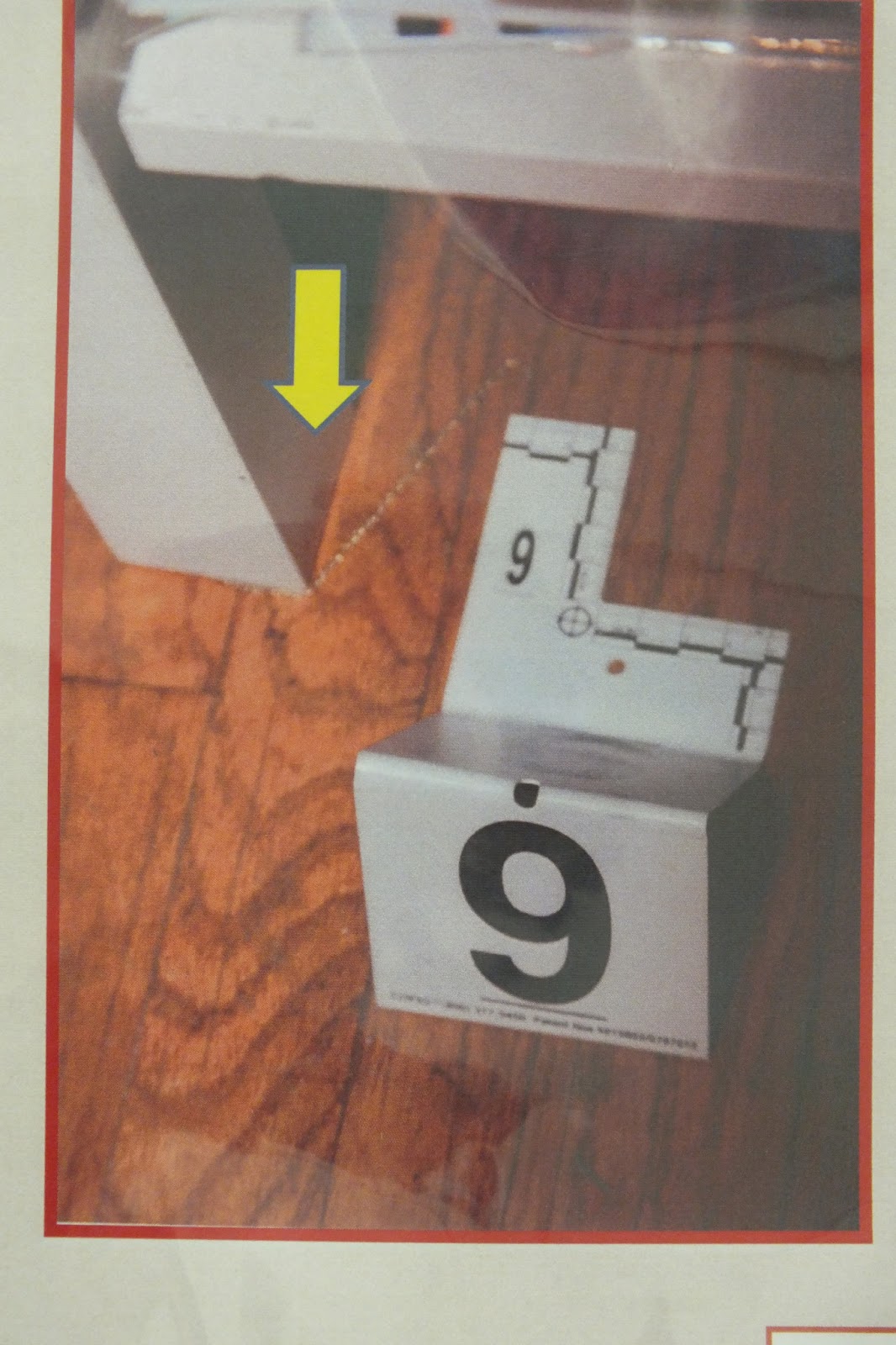
There was spilled oil from a vase under the tray. There was no oil around the tray and the vase with the oil was upright.
Table with tray showing lamp, candle and vase with oil.

That means someone cleaned up the oil around the tray. There was a red plate between the TV and the wall.  There were pieces of broken white porcelain on the floor.  Broken pieces of porcelain were also located in the kitchen sink, and also in the kitchen trash.

Plates in sink with broken porcelain pieces. 
Orange plate had fingerprint on the back side.

Zycowski observed both red and white broken pieces and that all those broken pieces combined could not make an entire plate.  A lamp was unplugged and out of place. The lamp cord was under one of the table legs.  Ms. Zychowski located Juliana's broken nail. They found it behind the couch. Okun-Wiese states, "That nail did not just get there; it came off during a very brutal struggle. The detectives located Juliana in her bedroom, with all her injuries. Obviously, she was dead.

Okun-Wiese talks about the clean of the crime scene.  The spilled oil that was cleaned up.  Juliana in her bed. That's not the position she died in. That's the position someone placed her in with her legs crossed.  Zychowski testified they used luminol and certain areas lit up, one of those areas being the hallway to Juliana's room. "Somebody dragged Juliana into that room, and that somebody, ladies and gentlemen, is the defendant in this courtroom," Okun-Wiese tells the jury.

"Think about how her DNA got on Juliana's tank top. 

 Tank top front.
You grab somebody from behind and you wrap your arms around them and you drag them and you throw them on the bed.

 Tank top back.

Your DNA is going to go from your body to their back tank top, and your DNA from your arms is going to get on the front tank top of Juliana."

The sofa pillow that didn't have a cover. Officers searched all over for that cover and didn't find it. Why? Because the defendant took it with her to conceal evidence.

Sofa cushion pillow with no cover.


Evidence Against Park

DNA testing.  Over the course of two years, the Orange County Crime Lab examined more that 70 items of evidence and 42 reference and secondary samples. It wasn't until Detective Thompson found out about Uwaydah and started looking at his associates that a suspect was identified. The suspect was identified through DNA. In March 2010, Ms. McCall called Detective Thompson and that call indicated "you finally have your suspect."

Annette McCall testified about the examination process, the quantification process and the amplification process and the typing process. Then she gave her results and findings. Oken-Wiese tells the jury, "And the defense got up here and they tried to talk about these extra possible alleles, and they tried to divert your attention from what she was testifying about."  Those extra stray alleles do not negate the fact of the defendant's profile on each one of the items: The cell phone, the tank top, the neck, the door the blood on the fingerprint, the stove; each one was a match to the defendant's profile.

Okun-Wiese talks about the defense witness Cher Brooks, the random allele on Juliana that could have been hers, and how Brooks was excluded as being a contributor to the items in Juliana's apartment.  Juliana was an active person, with lots of friends that she hugged. Annette McCall said it would not be uncommon for a portion of someones DNA to be on Juliana.

McCall testified there are just under 7 billion people in the world. The frequency of choosing an individual with this profile (found on all those items) is more rare than one in 200 billion unrelated individuals. That would be the equivalent of 29 world populations. And even in that event, you still may not find another person who has the same DNA profile as Park.

Juliana's neck.
Neck swab.

The frequency of choosing an individual with this profile is more rare than 1 in 300 million unrelated individuals.

The cell phone. More rare than 1 in 1 trillion unrelated individuals.
The cell phone on the bedside table.

Okun-Wiese asks the jury to think about that cell phone and the 911 call. Juliana was calling 911 and the defendant pulled the phone away from her and hung the phone up. The front stove knob. It was turned to the on position. The defendant was hopeful she would get rid of evidence by blowing up that apartment.

Okun-Wiese goes back to the clean up and the luminol. Zychowski testified that you couldn't see the blood with your natural eye; they had to spray it with luminol, and then it shined. The defendant tried to clean up that blood. She tried to cover her tracks.

The front interior door.  This profile is more rare than 1 in 1 trillion. The defendant is the only one with this profile.  The suspected blood on the latent print, that Zychowski sent to the crime lab in January 2009. And the lab confirmed that it was blood. A single source blood. And that profile was the same profile that was a contributor in each one of the items just discussed.  That frequency, is more rare than 1 in 1 trillion.

Okun-Wiese goes over each one of these items again, that had DNA evidence on them and why it's there.  This wasn't a case where they didn't eliminate people. 42 women were eliminated. 70 items of evidence were examined. This is a case where the evidence is overwhelming with DNA.

Besides the DNA, there's also a fingerprint. A fingerprint lifted from the crime scene on March 17th. When Park was arrested on June 17th, 2010 the following day Santa Monica PD got a queue. Deputy Bevan explained how the AFIS system works, that all the fingerprints entered stay in the system.  When Parks fingerprints went into the system, the system found a potential match.

Comparison of print collect at scene and Park's left thumb.

Okun-Wiese talks about the experts who examined the fingerprint the lines and ridges they looked at and that they all made a match comparison to Park. She mentions their years of experience evaluating thousands and thousands of fingerprints, and how they've testified in court. Okun-Wiese reminds the jury that there was no evidence to negate that this fingerprint belongs to the defendant. "She left this fingerprint with her blood on a plate in Juliana's apartment when she killed her on March 15th of 2008," Okun-Wiese tells the jury.

The contact by Detective Bambrick with the defendant at the animal shelter. The audio recording and the transcript. "And when the defendant hears the victim's name, Juliana Redding, she says, 'Oh, my God.' And through throughout the entire recording, she says, "I don't believe you. I don't believe you." Bambrick showed the defendant his badge and his card. He even got the Ventura County Sheriff's to come out and Park still wouldn't give her fingerprints. Why? Her fingerprint was at the scene. "The minute she heard Juliana Redding's name, she knew she was done for. And that's why she refused to provide her fingerprint."  Not because she didn't believe he was a detective, but because she was caught.

Conclusion
The evidence in this case is overwhelming. The DNA, the numbers are overwhelming. There was no one there but the defendant and Juliana. Okun-Wiese reminds the jurors of Park's weight and height compared to Juliana.  She reminds the jurors that Juliana struggled and struggled. She cut her foot on something sharp. Her nails were all jagged. She lost her thumbnail.  She had multiple hemorrhages to her head.  She had a cut in between her lip and her teeth from being hit in the face.  She suffered bruise after bruise after bruise. This girl was brutally, brutally murdered. The defendant is responsible for her murder, for she is the only link to Uwaydah.

Okun-Wiese goes over the relationships again. Juliana dated or had a friendship with Uwaydah. "The defendant is his business associate or his mortgage broker or, according to her booking sheet, a medical consultant, or she is involved with raising capital for banks. She is linked to uwaydah who was linked to Juliana and Greg Redding."  Over 18 months, she received one million from Uwaydah.. The defense tried to say, "Well maybe it was real estate money." She wrote a check from her business to her personal account for $300,000.00 seven months after the murder. (After the large transfer from Frontline Medical to her business acct. Sprocket.)

Okun-Wiese goes over several items again. Park refusing to provide her prints because she was in trouble. She lists all the items with the DNA and their rarity numbers. The fingerprint at the scene. "These points ladies and gentlemen, add up to nothing other than the defendant is guilty of first degree murder. Thank you."

To be continued....

Saturday, June 29, 2013

Kelly Soo Park Case Exhibits & Potential Cases to Follow

 Juliana Redding, dates unknown

UPDATE 7/1: spelling, clarity
Kelly Soo Park
This past Thursday I spent the entire day in the bowels of the downtown Criminal Justice Center with Lonce La Mon of Adjuster.com.  A week earlier, we made a joint formal request (in writing) to the court to photograph the exhibits in the Kelly Soo Park case.  All the exhibits for every completed case tried in the CJC are kept in a secure "exhibits room," two floors down from the main floor.  Trial exhibits are never destroyed; they are kept indefinitely.

Here's how the process works. Once the formal request is approved by the presiding judge, you make an appointment with the Exhibit Room staff to photograph the exhibits in a particular case.  The exhibit room is in a very secure area and under camera surveillance.  You need an escort to get to the lower floor via the freight elevators. The elevators only go to those floors with a key access.  There is a door with a key code entry and several other doors where you need to be buzzed in.  You have to show your signed court order by the judge, your request letter and also fill out a form with your name and other information.  You also need to show a form of ID, such as a driver's license.

The exhibit viewing area is a row of separate counters with comfortable chairs separated from the Exhibit Room Department by cage fencing.  The clerk staff will give you a print out list of all the exhibits so you can keep track.  The staff member will hand you three items at a time to photograph.  Once those items are returned, the clerk will hand you three more items to photograph.

 Not to scale diagram of Juliana Redding's apartment

I was able to photograph all the grand jury exhibits. I photographed almost all the trial exhibits. There were over 50 grand jury exhibits and about 120 trial and court exhibits. I took well over 300 photographs. Please understand that it will take some time to convert all these JPGS to PDF format and put them up on T&T's SCRIBD account. I have to say that the Court's Exhibit Room staff were super nice and helpful through the entire process.

Please be aware that, out of respect for the victim and her loved ones, I will not be uploading any exhibits that include images of the body of Juliana Redding.

Juliana Redding's living room
Detective Bambrick and other officers serve Park with
the search warrant for her fingerprints
 
Potential Cases to Follow
It looks like the Cameron Brown case will not go to trial until January of 2014.  It's unlikely that Gargiulo will get to trial anytime in 2014. It's not certain yet, but it's also possible that the Gerhard Becker case will not settle and will go to trial.  The Becker case would have to be transferred to a long cause courtroom and wait a turn on that Judge's calender.

So, I'm looking for a case that might be going to trial soon, and I'm looking for some feedback from T&T's readers.  I do not know how far along in the process most of these cases are.  Woodward is a relatively new case.

Jason Schumann, charged with murder in the death of a high-school soccer player.  Next court date August 5th in Van Nuys, Dept. S. This is DDA Beth Silverman's case.

Douglas Gordon Bradford charged with a cold case murder of a nurse in 1979. Next court date is July 12th in downtown LA, Dept. 103.

Joshua Woodward restaurant owner charged with the murder of his girlfriend's fetus. Next court date is July 15th in downtown LA, Dept. 30.

Louie Sanchez and Marvin Norwood charged in the Dodger Stadium attack of Brian Stow. Last court date June 28th. Next court date September 9th in Downtown LA Dept 107. (Doesn't look like that case is going to trial soon, either.)

There's also the case of Ka Pasasouk, who shot four people at a Northridge, CA illegal boarding house last December. This is DDA Daniel Akemon's case.

How do T&T readers feel about gang murder cases?  Usually, these cases are gang members killing rival gang members, so you often times do not have a sympathetic victim. I believe that DDA Garrett Dameron (co-counsel on the Gargiulo case) has a death penalty gang case that will go to trial in September.  I'm not remembering the name of the defendant at the moment, but there were four victims.  Two victims were other gang members and two victims were innocent business owners who were beaten to death in a robbery gone bad.

Do any of these cases sound interesting to T&T readers? Or, if there are any other Los Angeles murder cases that you are interested in, please drop us a line or leave a comment.